Wishonda · UsMirrorExplore UsMirror ↗

A conversation starter

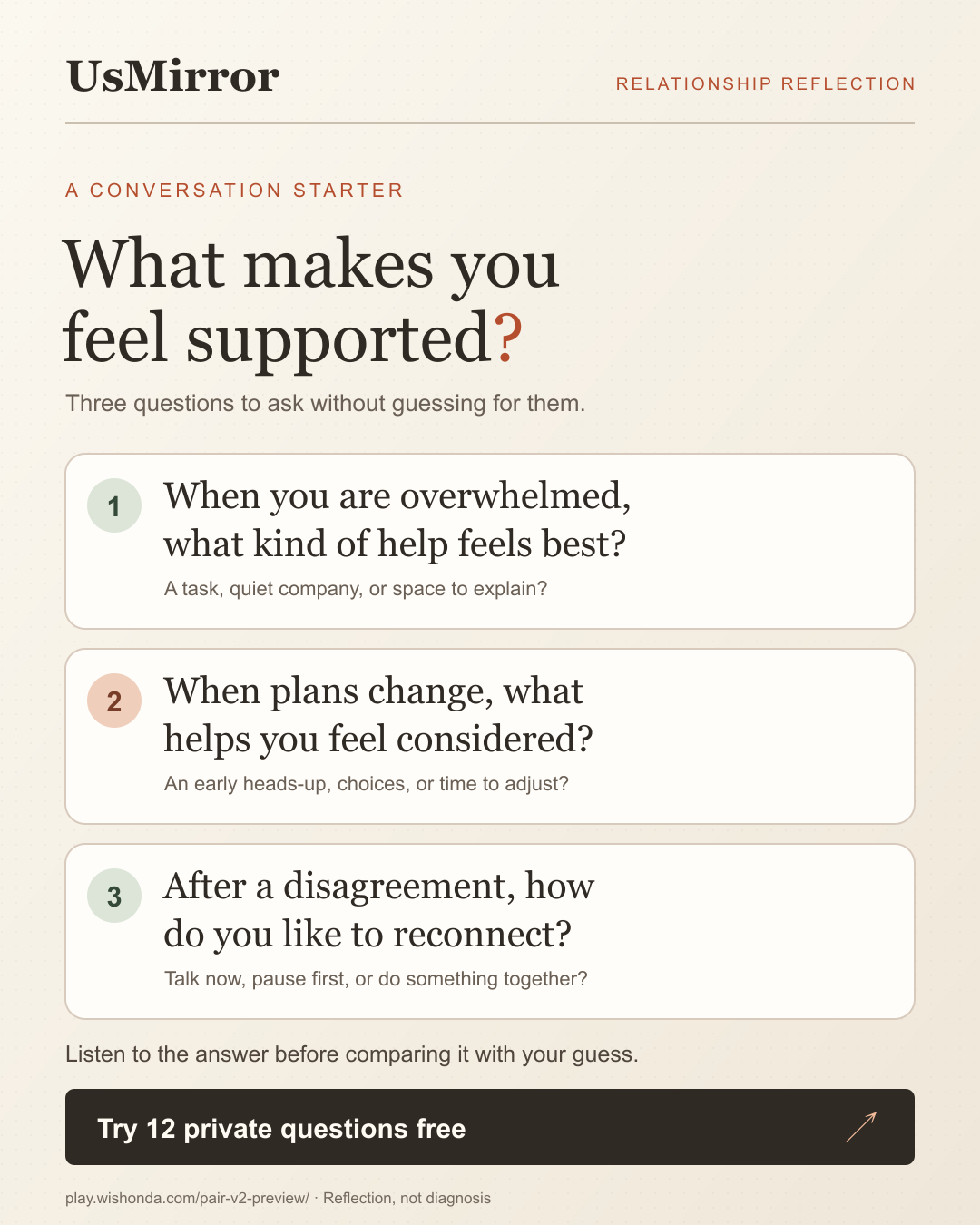
What makes you feel supported?

Ask three everyday questions about support, changed plans and reconnecting after a disagreement.

Try the free 12-question reflection ↗

There is no score and no ideal answer. Ask, listen, then share what would feel helpful to you.

By Wishonda · Published 4 October 2026

Three original conversation prompts about feeling supported

Three questions to try

01

When you are overwhelmed, what kind of help feels best?

You might want a task taken off your plate, quiet company, help organising a plan, or time to say what you need. Let the other person choose; do not assume your preference is theirs.

Try asking: “Would taking one thing off your list help, or would you rather I stay and listen?”

02

When plans change, what helps you feel considered?

An early heads-up may matter more than a detailed explanation for one person. Someone else may prefer a choice of alternatives or a little time to adjust. Talk about a recent small change rather than a hypothetical argument.

Try asking: “Next time our plans move, what would you like me to tell you first?”

03

After a disagreement, how do you like to reconnect?

Some people want to talk immediately. Others need a pause before they can hear the other side. Agree on a way to signal that the conversation will continue, so a pause does not feel like an exit.

Try asking: “Would a short break help, and when should we come back to this?”

How to use the answers

Compare gently.

Listen first. Repeat what you heard in your own words and ask if you understood.

Offer your view. Say what support looks like for you without making the other person wrong.

Choose one small experiment. Try a different response this week and ask whether it helped.

Go a little deeper

UsMirror starts with your own choices.

Answer 12 everyday relationship questions privately and see a free personal preview grounded in your responses. A fuller individual report is optional at USD 1.99. Invite someone only if you want a comparison; the separate full two-person report is USD 3.99 after both people finish. Neither person sees the other’s item-level answers.

This is a reflection and conversation tool for adults, not a psychological diagnosis. Optional cultural details never change the answer-based interpretation.

Start free with my own answers ↗